
Land Consultation in NAINA
(MUMBAI -3.0)
S. P. More Realty Solutions provides consultancy services in the sale & purchase of Land Parcels in NAINA (NAVI MUMBAI AIRPORT INFLUENCED NOTIFIED AREA) jurisdiction. The original NAINA (MUMBAI -3.0) area comprised 270 villages, which later on was bifurcated in CIDCO, MSRDC & MMRDA.
What is NAINA (MUMBAI -3.0)?
- A large-scale urban planning initiative in Maharashtra, India, designated as the Navi Mumbai Airport Influence Notified Area, or NAINA. It spans dozens of villages across the Raigad and Thane districts and is designed to manage development around the upcoming Navi Mumbai International Airport.
- The project spans approximately 370 square kilometers, encompassing 270 villages in the Uran, Panvel, Karjat, Khalapur, and Pen talukas of Raigad district. It is sometimes dubbed “Third Mumbai” or “Mumbai 3.0,” given its ambition to emerge as a major urban node. It is envisioned as a major business and residential hub, aiming to attract investment

Key Features of NAINA (MUMBAI -3.0):
- Strategic Location
Spread over 561 sq. km. around the upcoming Navi Mumbai International Airport (NMIA). Covers parts of
Raigad District (Panvel, Pen, Karjat, Khalapur and Uran areas). Planned as an Aerotropolis Region with direct airport influence.
- Connectivity Advantages
Proximity to NMIA, Mumbai Trans Harbour Link (MTHL/Atal Setu), Mumbai–Pune Expressway and JNPT Port. Panvel Junction as a railway hub + the upcoming Nerul–Uran Suburban Rail + Navi Mumbai Metro Expansion. Multimodal: Air, Rail, Road, Metro and Sea linkages. Vasai – Virar Corridor, Panvel Karjat Local Train, Mumbai –Goa Highway
- Planned Smart Growth
CIDCO’s Town Planning Schemes (TPS): Land pooling and systematic urban development instead of haphazard growth. Mix of residential, Commercial, Industrial, Logistics, education and Healthcare hubs. Planned Self-Sustainable Satellite City
- Infrastructure Development
World-Class Social Infrastructure: Schools, Colleges, Hospitals, Malls and Recreation Spaces. Green Zones & Open Spaces to balance urbanization with the environment.
Smart Utilities: Water supply, Sewage, Waste Management and Power Distribution.
- Investment Potential
High Appreciation Scope due to proximity to NMIA.
Large-scale Housing Demand is expected for airport staff, businesses and logistics employees. Attractive for Real Estate Investors, Industries and Commercial Developments.
NAINA enjoys multi-modal connectivity—by air (NMIA), road (MTHL, highways, expressway), rail (suburban + freight), metro (Navi Mumbai network), and sea (JNPT Port). This makes it a prime location for residential, commercial, industrial, and logistics investments.
Connectivity and corridors
Direct proximity to Navi Mumbai International Airport (NMIA)– the central hub around which NAINA is being developed. Easy global and domestic connectivity once the airport becomes operational.
- Mumbai Trans Harbour Link (MTHL/Atal Setu): Connects Sewri (Mumbai) to Nhava Sheva (JNPT), reducing travel time from South Mumbai to NAINA. JLN Port Road & NH-348, NH-4B: Provides strong connectivity to JNPT Port and Industrial Hubs.
- Mumbai–Pune Expressway & NH-4: Easy linkage to Pune and other parts of Maharashtra.
The Panvel–Karjat & Panvel–Uran corridors improve accessibility.
Suburban Railways: Panvel Junction acts as the major rail hub connecting Central, Harbour and Trans-Harbour lines. The Mumbai–Ahmedabad & Mumbai–Pune rail corridors enhance regional connectivity. The upcoming
Nerul–Uran suburban railway line will boost access for NAINA areas.
Future Mumbai–Hyderabad & Mumbai–Bengaluru Bullet Train Corridors add long-term value.
Navi Mumbai Metro (Line 1, Belapur–Pendhar): Operational, improving Panvel–Taloja–Kharghar connections. Future extensions will integrate with the Mumbai Metro Network, enhancing seamless travel.
Proximity to JNPT (Jawaharlal Nehru Port Trust)—India’s largest container port. Boosts industrial, warehousing, and logistics potential in NAINA. (We need images also to get public proper idea.)
NAINA (MUMBAI -3.0) enjoys multi-modal connectivity—by air (NMIA), Road (MTHL, highways, expressway), Rail (Suburban + Freight), metro (Navi Mumbai Network) and sea (JNPT Port). This makes it a Prime Location for Residential, Commercial, Industrial and Logistics Investments.
Connectivity and Corridors

Air Connectivity
Direct proximity to Navi Mumbai International Airport (NMIA)– the central hub around which NAINA (MUMBAI -3.0) is being developed. Easy global and domestic connectivity once the airport becomes operational.

Road Connectivity
Mumbai Trans Harbour Link (MTHL/Atal Setu): Connects Sewri (Mumbai) to Nhava Sheva (JNPT), reducing travel time from South Mumbai to NAINA (MUMBAI -3.0). JLN Port Road & NH-348, NH-4B: Provides strong connectivity to JNPT Port and industrial hubs.
Mumbai–Pune Expressway & NH-4: Easy linkage to Pune and other parts of Maharashtra.
The Panvel–Karjat, Panvel–Uran, Vasai–Virar corridors & Mumbai –Goa Highway improve accessibility.

Rail Connectivity
Suburban Railways: Panvel Junction acts as the major rail hub connecting Central, Harbour, and Trans-Harbour lines. The Mumbai–Ahmedabad & Mumbai–Pune rail corridors enhance regional connectivity. The upcoming Panvel-Karjat & Nerul–Uran suburban railway line will boost access for NAINA MUMBAI -3.0 areas. Future Mumbai–Hyderabad, Panvel Karjat Local train & Mumbai–Bengaluru bullet train corridors add long-term value.
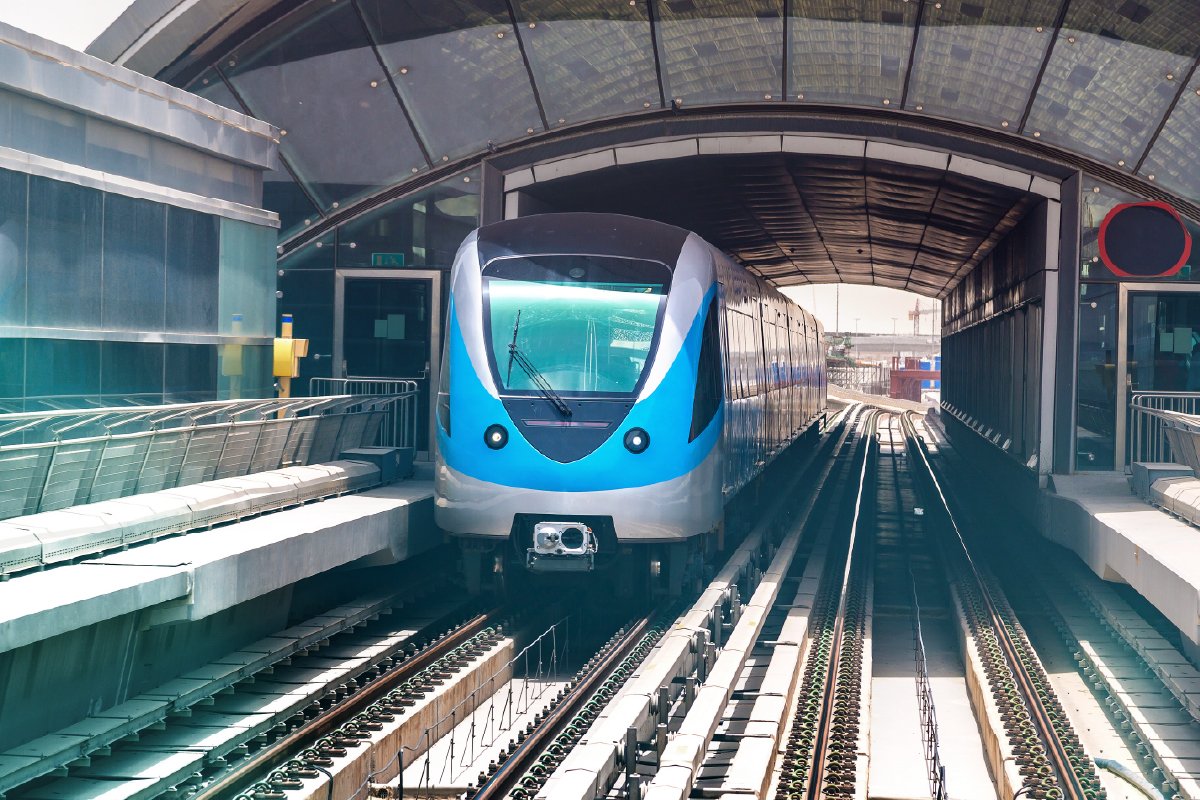
Metro Connectivity
Navi Mumbai Metro (Line 1, Belapur–Pendhar): Operational, improving Panvel–Taloja–Kharghar connections. Future extensions will integrate with the Mumbai Metro network, enhancing seamless travel.

Port Connectivity
Proximity to JNPT (Jawaharlal Nehru Port Trust)-India’s largest container port. Boosts industrial, warehousing and logistics potential in NAINA (MUMBAI -3.0). (We need images also to get public proper idea.)
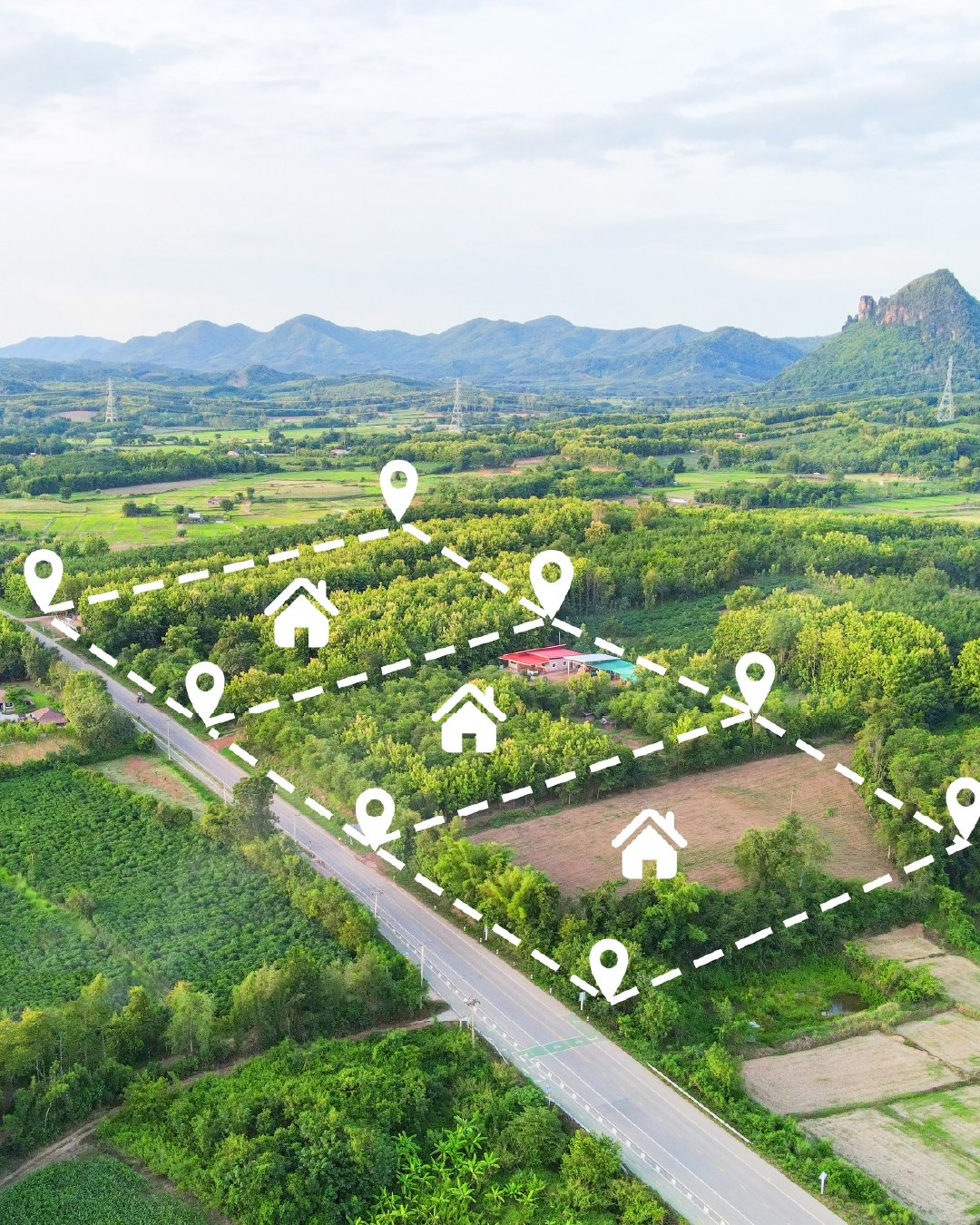
Proposed Special-Purpose & Theme-Based Zones in/around NAINA
(MUMBAI -3.0)
- Aerocity near the airport.
A dedicated zone for education, research, campus development, and student housing. As per recent plans, this is being developed near the airport and forms part of NAINA’s (MUMBAI -3.0) institutional/social infrastructure cluster. - Medicity (Healthcare Hub).
The broad idea appears to be to create a dedicated Healthcare/Medical-Infrastructure Zone (Medicity) within the airport influence area. This could mean hospitals, medical campuses/institutions, or perhaps ancillary services—a health hub to serve both residents and the overall airport-city ecosystem. The reference to “Medicity” along with other large-scale zones suggests it is intended as a major, planned component rather than ad hoc clinics. - Educational Hub (Universities, Research Institutes).
A dedicated zone for education, research, campus development, and student housing. As per recent plans, this is being developed near the airport and forms part of NAINA’s (MUMBAI -3.0) institutional/social-infrastructure cluster. - Commercial & IT Hubs.
The stated objective of NAINA (MUMBAI -3.0) is not only residential or airport-area development —but to create a Polycentric City combining Trade, Information Technology, Services, Corporate Offices, Logistics, and Commercial Hubs along with Housing and Social Infrastructure. - Residential townships with affordable and premium housing.
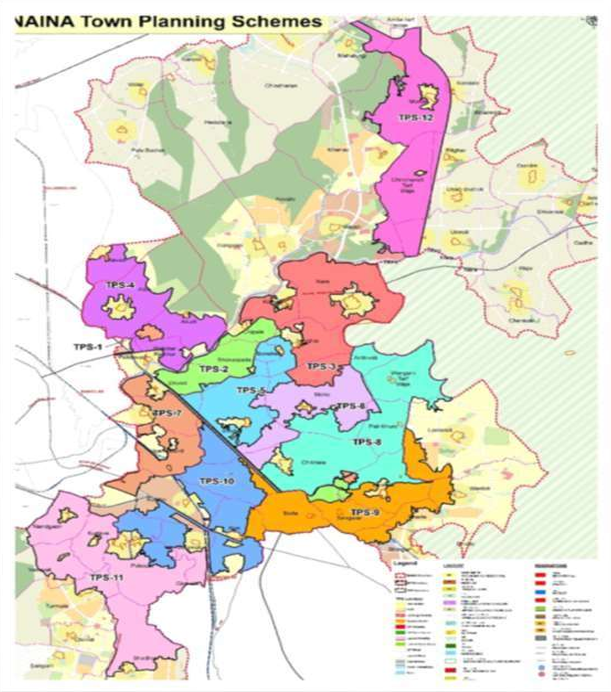
TPS SCHEME NAINA (MUMBAI -3.0)
A TPS is a method where private land is reorganized by the government/authority for proper urban development.
- Landowners give part of their land for roads, parks and amenities.
- The remaining land is returned to them as well-shaped, serviced plots.
- Since the value of the land increases, landowners pay a small share of development costs through betterment charges.
Key Features of TPS Scheme
Land Pooling & Readjustment
1. Land from several owners in a designated area is pooled together.
2. After planning, each owner gets back a reconstituted plot in proportion to their original holding but in a better-planned layout.
Infrastructure Development
1. Roads, drainage, water supply, electricity, gardens, open spaces and social amenities are systematically planned and developed.
Reservation For Public Purposes
1. Part of the land is reserved for schools, hospitals, gardens, playgrounds and other public utilities.
Equitable Land Distribution
1. Every landowner gets land value in proportion to their original holding (minus a deduction for amenities and infrastructure).
2. The location may change, but the value and accessibility improve.
Cost Recovery Mechanism
1. The cost of infrastructure development is shared by landowners through a system of betterment charges (since the land value increases due to development).
Transparency & Fairness
1. Carried out with legal provisions under the Town Planning Act.
2. Provides fair compensation where necessary.
Efficient Urban Growth Management
1. Prevents haphazard, unregulated growth.
2. Ensures orderly expansion of urban areas with proper zoning.
Boost in Land Value
1. After the scheme, reconstituted plots usually have higher market value due to improved access, amenities and legal clarity.
Public Participation
1. Draft TPS is open for objections and suggestions before finalization.
Sustainability & Livability
1. Focuses on green spaces, transport corridors and balanced development for long-term urban sustainability.
- Landowners contribute their land into a common pool.
- CIDCO designs a modern urban layout.
- Roads, drainage, utilities, and public amenities are carved out.
40% of the original land is returned to landowners as “Developed Plots.” The remaining 60% is used for:
Roads
Public spaces
Schools/hospitals
Commercial corridorsa
Utilities & infrastructure
City-level facilities
What TPS Provides
Each TPS includes:
- 12 m–60 m wide Roads
- Water, Sewage, Electricity, Telecom
- Stormwater Drainage
- Gardens and Playgrounds
- Public Amenities
- Commercial/mixed-use corridors
- Residential Sectors
- Industrial/logistics pockets (in some TPS)
TPS is the backbone of -3.0 planned city model.
How Landowners Benefit
- NAINA (MUMBAI -3.0) returns Developed Plots. Plots have:
- Road Access
- Drainage
- Water Connections
- Buildable Permissions Land value increases sharply after infrastructure rollout.
This is the biggest benefit—because the development potential of the surrendered land is added back to the landowner's remaining plot.
- In TPS areas:
- You do not need to buy TDR for FSI up to the 2.5 limit.
- TPS plots already include the “Additional FSI” due to the land pooling benefit.
- Because final plots are reshaped with:
- Wider Roads (18m, 24 m, 30 m, 45 m, 60 m)
- Better Plot Access
- Regular plot shape
TPS schemes bring:
- Internal Roads
- Drainage Lines
- Water Network
- Open Spaces
- Social Facilities
The owner does pay for:
- Major Roads,
- Streetlights,
- Drainage,
- Water Pipelines and
- Public Facilities
This infrastructure is created by NAINA through the land pooling system.
TPS gives:
- Legally defined final plot
- Surveyed and marked plot boundaries
- No overlapping or missing land
- No disputes about encroachment
- Guaranteed ownership through NAINA This makes development safe.
After TPS, the land value increases because:
- Roads are Constructed.
- Infrastructure is Planned.
- FSI is Higher.
- Commercial Viability Increases

Why Choose S. P. More Realty Solution as Your Land Consulatation Partner ?
- Bucket of Land Parcels in NAINA (MUMBAI -3.0) (TPS and Other zones)
- Consultation on T.P.S. Schemes.
- Architectural and Development Feasibility Insights.
- Analyzation of Future Growth, Infrastructure Plans and Appreciation Potential.
- Land Consultation in other Zones (Non-T.P.S., Residential, Commercial & Industrial)
- Land Consultation in CIDCO (12.5 %, 22.5 %, Institutional Plots)
- Land Consultation in MSDRC, MMRDA area.
- Revenue Department Consultation (7/12, 6A, etc.)
- Guidance on Regularization of Unauthorized Structures in NAINA (MUMBAI -3.0).
- Sale / Purchase of the plots in Third Mumbai Area
- Legal guidance in Real Estate Sector
- Regularization of Structures
- Garajepoti (गरजेपोटी)
We specialize in the sale and purchase of plots in key areas within the Third Mumbai region, including high-demand zones managed by various governmental and development authorities. Our expertise covers a wide range of real estate transactions, ensuring smooth and legally compliant processes. The specific areas we focus on include:
NAINA Area (New Mumbai Airport Influence Notified Area): We assist in the sale and purchase of plots in the NAINA area, which is strategically important due to its proximity to the Navi Mumbai International Airport and upcoming infrastructure developments.
CIDCO Area: We provide legal consultancy for properties within the CIDCO jurisdiction, handling the sale and purchase of plots under the City and Industrial Development Corporation (CIDCO), ensuring compliance with regulations and ensuring clear title.
MSRDC Area (Maharashtra State Road Development Corporation): We offer advisory and legal services related to plots in the MSRDC areas, which are impacted by the state’s road and infrastructure projects, ensuring smooth transactions and due diligence.
MMRDA Area (Mumbai Metropolitan Region Development Authority): We handle the sale and purchase of plots in the MMRDA region, which is a vital part of the Greater Mumbai area, covering key urban development zones and planned projects.
All Areas Under the Town Planning Department: We also provide services for plots in areas managed by the Town Planning Department, which involves urban development, zoning regulations, and proper documentation for property transactions.
Our extensive experience and understanding of local regulations make us your trusted partner in navigating real estate transactions in these vital development zones. We ensure that all legal requirements are met, providing a seamless and secure process for the sale and purchase of properties.
We are seasoned legal professionals with 15 years of expertise in the real estate sector. Over the years, we have successfully provided strategic legal consultancy and project management advisory services to various authorities, including CIDCO, NAINA, Panvel Municipal Corporation, MSRDC, and MMRDA.
Our range of services includes:
Redevelopment Compliance: Ensuring that all legal aspects of redevelopment projects comply with relevant regulations and requirements.
TITLE/Search Certificate and Land Records: Conducting thorough title searches and providing certificates for property transactions, ensuring clear and unambiguous ownership.
Society Formation, Conveyance, and Sale Deed: Assisting in the formation of housing societies, handling conveyance processes, and drafting sale deeds for smooth property transfers.
Legal Heirship and Succession: Offering legal guidance for matters related to inheritance, succession, and the transfer of property rights upon the death of the property owner.
RERA Compliance: Ensuring that real estate projects comply with the Real Estate (Regulation and Development) Act (RERA) and addressing related legal issues.
Revenue Records: Managing and verifying revenue records to ensure proper documentation and legal standing of properties.
Land Acquisition Laws: Providing advice and support for land acquisition matters, including compensation, processes, and disputes.
Development and Other Allied Agreements: Drafting and reviewing development agreements, joint venture agreements, and other contractual documents related to real estate projects.
Our extensive experience and comprehensive service offerings make us a trusted partner for navigating the complexities of real estate law and development.
Regularization in NAINA, MSRDC and CIDCO Area:
The concept of regularization in the context of the NAINA ( Navi Mumbai Airport Influence Notified Area) and CIDCO (City and Industrial Development Corporation of Maharashtra) areas refers to the process through which illegal or unauthorized constructions are made legal by the government, subject to certain conditions. This process is often undertaken to address the issue of informal or unapproved developments, which may not comply with original zoning and land use regulations.
Benefits of Regularization:
- Legal Recognition: The primary benefit of regularization is that it grants legal status to
otherwise unauthorized constructions. - Access to Basic Amenities: Regularization allows the residents to access basic civic amenities such as water, electricity, and sanitation, which are otherwise restricted in unauthorized constructions.
- Property Value Appreciation: Once a property is regularized, its market value typically appreciates as it becomes legally recognized.
- Security of Tenure: It ensures property owners have security regarding the legality of their land or property, preventing eviction or demolition.
‘Garajepoti’ is a scheme initiated by the City and Industrial Development Corporation (CIDCO) to regularize unauthorized structures constructed by Project Affected Persons (PAPs) in Navi Mumbai. These PAPs are from 95 villages whose lands were acquired by CIDCO in the 1970s for the development of Navi Mumbai. In exchange for their acquired lands, PAPs were promised 12.5% developed land. However, due to delays in land allotment, many PAPs built additional structures to accommodate their
growing families. Announced on February 25, 2022, the Garajepoti scheme offers a 30% discount on CIDCO’s reserved price for plots up to 200 square meters and a 60% discount for plots between 201 to 500 square meters. This initiative aims to provide PAPs with affordable housing options and address unauthorized constructions. As of July 2023, CIDCO began surveying these structures and issued tenders for the regularization process. For more detailed information or assistance regarding the Garajepoti scheme, you can contact the following CIDCO officials.
Services provided by S. P. More Realty Solution in NAINA area ?
01.
Architectural Consultation
We are successfully handling various Architectural Projects with Structural Consultation in NAINA. We have a set of qualified and experienced Architects and Civil Engineers and liasoners.
We provide all services starting from Land parcels along with Architectural consultation, Structural details, Construction management till Project,completion.